4 + 4 Best Practices for Marketing Shoes with Augmented Reality
4 + 4 examples of how to generate exciting user experiences for shoe buyers and achieve measurable success as a retailer.
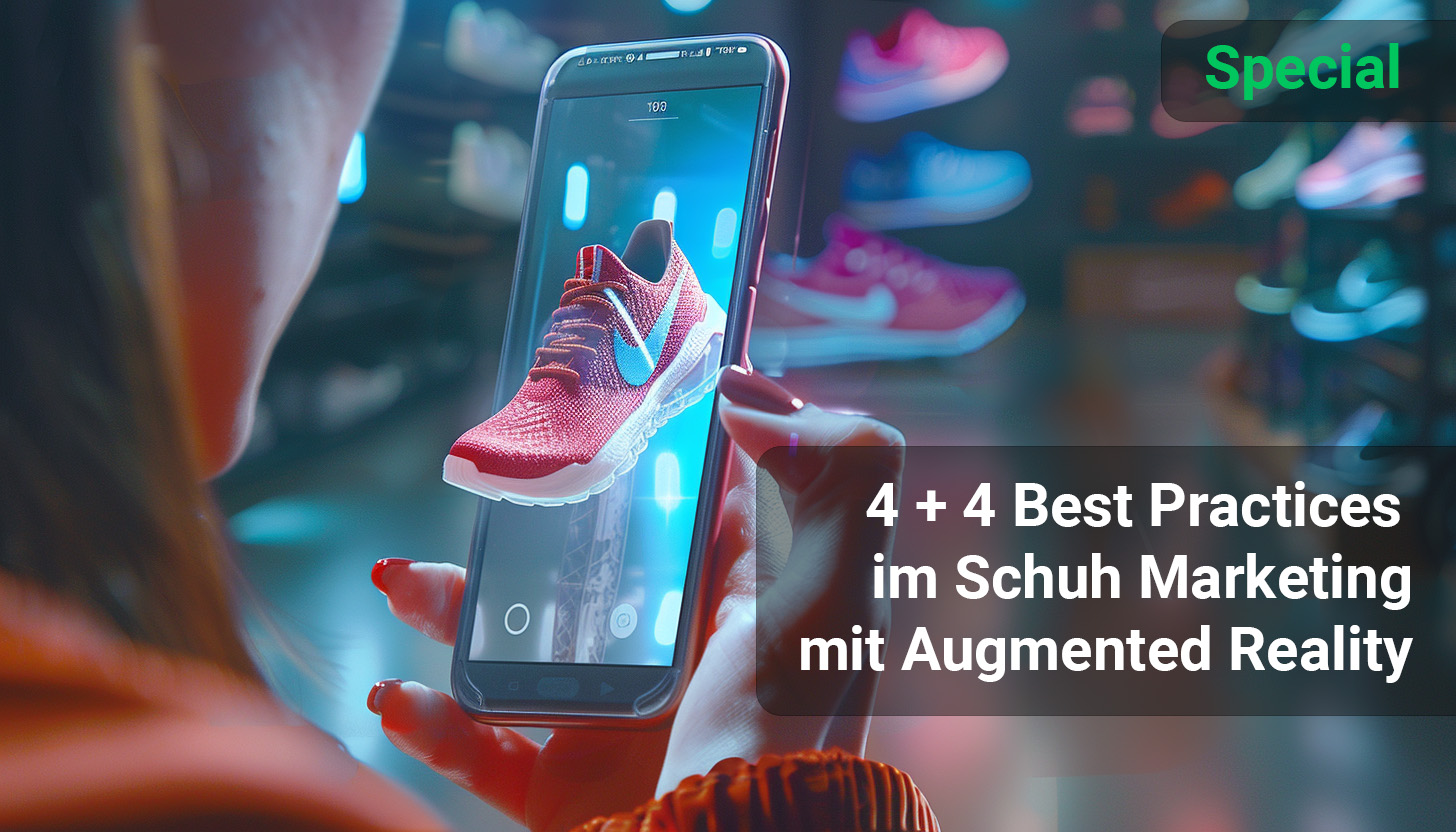
Discover concrete examples of how selected providers have benefited from Augmented Reality.
With significantly better conversion rates across the entire funnel and higher customer confidence in the buying process.
1) Amazon Virtual Try-On Shoes
Amazon's virtual try-on for shoes (Virtual TryOn, see video above) is an Augmented Reality (AR) feature that allows customers to visualize how a pair of shoes would look on their feet before making a purchase.
It combines 3D models of shoes with the live feed from the customer's phone camera to create an AR experience where the customer can view the shoes on their feet from different angles.
What do you need for this? The model is integrated like other product content (e.g., images, 360-degree views, or videos) – you only need the 3D model of your product.
Simply contact us, if you want to use your products in excellent quality for Virtual TryOns.
2) Nike Virtual Try-On (Nike Fit) reduces returns
Augmented Reality now works on any standard smartphone without the need to download a separate app.Before this was the case, you had to use a dedicated app to offer these unique experiences.Nike already has a strong and far-reaching app and published its first major Virtual TryOn solution in 2019.According to Nike, this enabled them to reduce the return rate for purchases by 28%.
3) Burberry improves user experience already in search
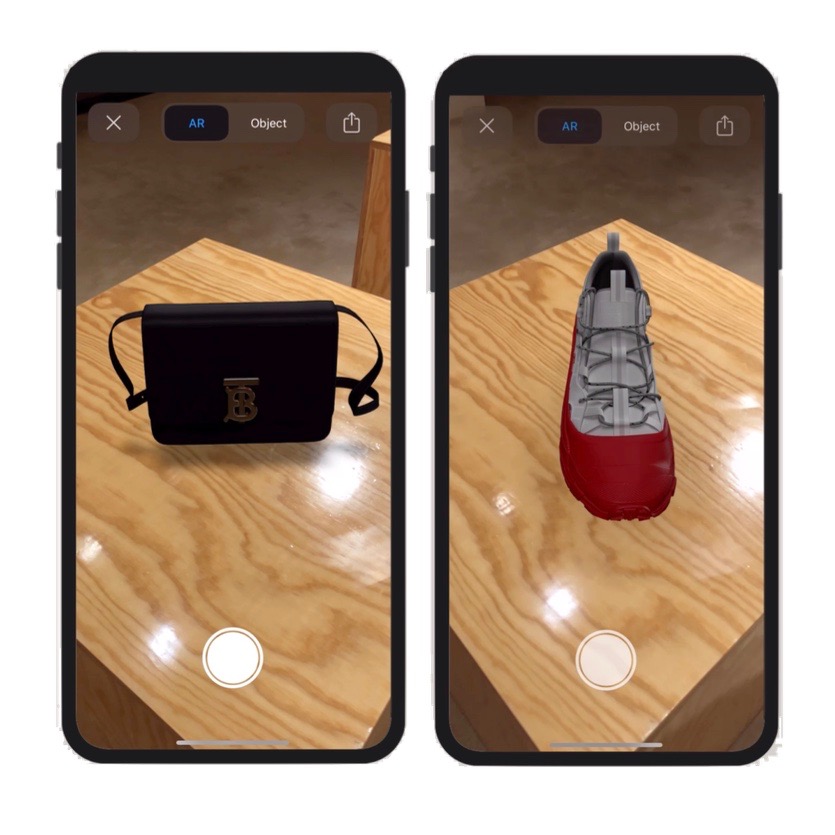
Burberry already used a new Augmented Reality (AR) function via Google Search in 2020 to display their products such as bags and shoes in 3D. This allows consumers to experience Burberry products in their real environment and thus get a better idea of the product before buying it. If users search for Burberry items like the TB bag or the Arthur Check sneakers on Google, they can place an AR version of the product in original size next to other objects. This feature is intended to offer a personalized luxury shopping experience already when searching for inspiration.
4) Dior quadruples ROI with AR Launch Campaign
Christian Dior collaborated with Snapchat to promote the launch of their new B27 sneakers.According to Dior, the Lens and Snapchat ads alone quadrupled the brand's return on ad spend to 3.8x and generated an additional 2.3 million views.According to Dior, this was one of the brand's most successful activations, as it allowed customers to experience the products digitally and purchase them directly through the platform. Dior sees AR as an opportunity to revolutionize the digital customer experience and appeal to a younger, digitally savvy target group.
5) 300% better conversion rate in e-commerce advertising with AR and 3D models
According to NexTech, its 3D/AR ad network achieved significant increases compared to 2D advertising materials.The use of the company's 3D/AR ads led to a 300% increase in conversion rate, a 32% increase in click-through rate (CTR), and a 23% reduction in cost per click compared to conventional 2D ads.The network allows retailers to place 3D and AR ads on e-commerce websites.
6) 11x higher conversion rate through "View in my Room" function
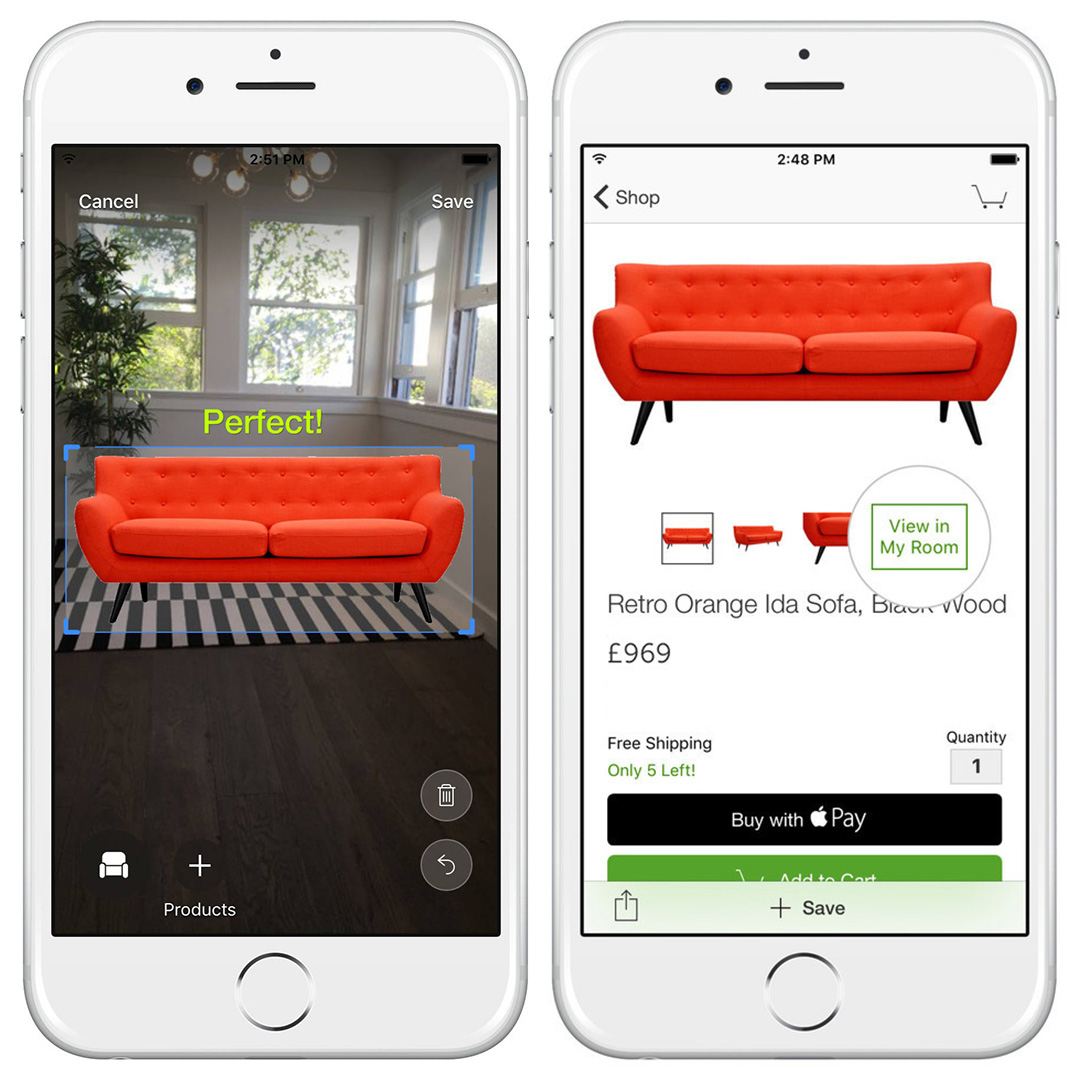
Over a period of 2 years, more than 2 million people have used the Augmented Reality feature of the Houzz App. Houzz is a leading platform for interior design, interior decoration, and DIY.People who engaged with the tool were 11 times more likely to purchase and spent 2.7 times more time in the app.
7) Virtual Try-On for Jewelry
The small company Tryon Technology from Toronto has tried an application for AR use and virtual trying on of jewelry products, creating an appealing solution.
8) Virtual Try-On for Makeup
And in the field of makeup, there are also dedicated solutions that allow users to perform guided styling and makeup application.
Bonus: Fake Out Of Home: Eye-catcher through Augmented Reality trick in shoe marketing
A special example of the successful application of AR in shoe marketing is Nike's campaign for its sneaker collections. Nike created a series of 3D ads that were placed in various digital environments. With so-called Fake Out Of Home Ads, it is suggested that these are extraordinary video recordings, in which the product is breathtakingly staged. These are videos in AR style.
daniel erning
.png)
