Get Product Images for Online Shops Faster with CGI
Digitally created product images hold a high priority for successful online shops.

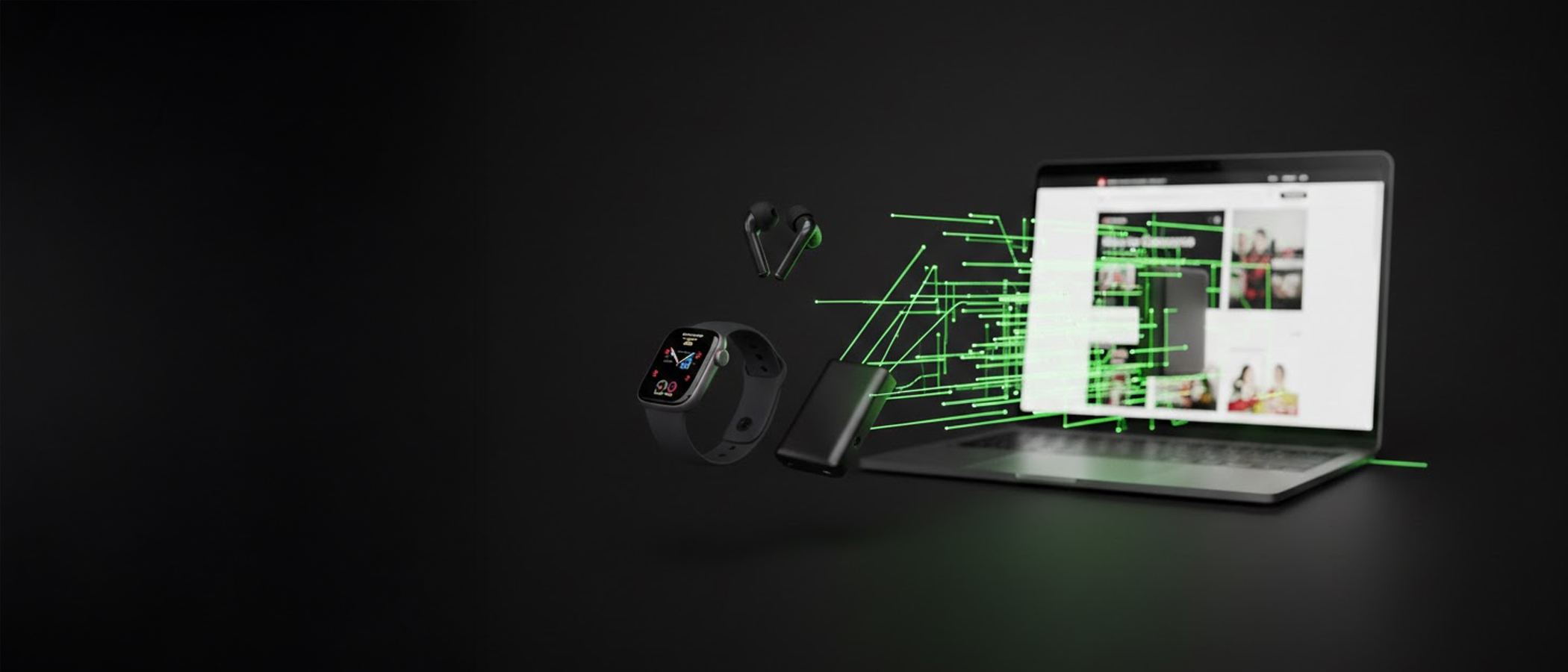
Product photos are particularly important for successful online retailers. Without being able to convey a haptic feeling, they must encourage their customers to buy. This can become expensive in the long run. The cheaper and time-saving solution is to be provided by digitally created product images, Computer Generated Imagery (CGI). The charming aspect is the possible reuse for Augmented and Virtual Reality apps, which are set to revolutionize the future shopping behavior of online customers.
Interview about the challenges and purpose of CGI
Nora Petig (iXtenso – Magazine for Retail) talks with David Wischniewski (CEO - RenderThat) about the challenges and purpose of CGI.
What is Computer Generated Imagery and how exactly does it work?
"Computer Generated Imagery (CGI) refers to images created on a computer. This can include everything – from abstract motifs to photorealistic product visualization. To create so-called renderings, the physical product is first recreated on the computer. Initially, all details are replicated so that we get a "digital twin" as a 3D model. In the next step, the 3D model is given the right materials and placed in a virtual space."
What advantages do retailers and customers have?
"Many companies contact us because traditional methods like photoshoots are too lengthy, expensive, and inflexible for them. Moreover, photography is not practical, especially for larger quantities of images. With CGI, we can place any product in any environment, and even after the project is completed, it is still possible to exchange products and scenes or show them from a different perspective. For example, the digital twin of a bed can easily be placed in a youth or parents' room and adapted according to the target group's needs. This exact flexibility leads to many companies already preferring CGI over traditional photography, and we are rapidly expanding.
For customers, it makes little difference whether the products are photographed or created on a computer. However, CGI guarantees high image quality and further use of the renderings in Augmented Reality (AR) or Virtual Reality (VR) apps is possible."
What prerequisites must retailers meet to implement CGI?
"That depends on whether the retailer wants to implement CGI within their own company or through an external partner. For in-house CGI production, software, hardware, and numerous other peripherals are necessary to produce high-quality 3D visualizations. In addition, 3D artists with the necessary quality and expertise must be found.
It becomes simpler if production is handled by an external partner: The retailer only needs to provide technical drawings of the products to be visualized. Another advantage is that CGI is compatible with existing work processes and publications. A solution using CGI therefore replaces traditional photography on the one hand and creates synergies and cost savings for the retailer on the other.
Depending on the digitization and visualization needs, it makes sense to consider a CGI Content Pipeline. This digital production chain largely automates the creation of 3D visualizations for every type of publication."
That sounds like a lot of effort for a small company.
"The effort for in-house production is manageable but makes sense for hardly any company. The acquisition and maintenance costs are quite high, technology is developing very quickly, and staff must be constantly trained. If these parameters are not met, it negatively affects the quality of the results.
Even with external production, the effort is quite small: Depending on the performance and service scope of the CGI partner, the retailer only needs to submit construction data or photos of the products to be visualized. In addition, expectations must also be coordinated. Here, the target groups, the presentation, as well as formats and environment standards are particularly important.
An automated CGI pipeline currently only pays off for retailers and platforms with several thousand products. However, once the pipeline is set up, production costs and times are immensely reduced. An efficient CGI pipeline, for example, creates hundreds of visualizations for all possible channels such as websites, catalogs, brochures, and social media within minutes."
For which retailers is this approach suitable?
"Basically, all products can be visualized with CGI. However, it is only worthwhile for retailers who actually sell a large number of their products. Of course, unique items or small editions can also be rendered, but here the costs for a CGI visualization are disproportionately high in comparison."
Rendering is the preliminary stage for displaying products in Augmented (AR) or Virtual Reality (VR) apps. For which retailers is this sensible?
"Basically for every retailer. AR apps are suitable for products of a manageable size. Of course, it is also possible to display larger objects. However, this requires a corresponding amount of space. Therefore, household appliances and furniture are best suited for AR apps."
Do retailers already offer such apps?
"The industry giant IKEA, for example, has been working with CGI for many years. Almost all visualizations on the website and in the IKEA catalog are 3D visualizations. But many retailers – from discounters to hardware stores to e-commerce platforms – are already working on largely converting their content creation to CGI. The reason for this is obvious: Besides saving time, the possibility of displaying visual content from different suppliers in a uniform style is also convincing.
Ideally, retailers then also directly leverage the synergies of CGI. With the created renderings, animations (product videos), Augmented Reality, and even configurators for the website can be created. This increases efficiency, improves the customer experience, and at the same time saves costs."
How much do retailers have to invest?
"Simple product visualizations are relatively inexpensive, costing a few hundred euros per image. Especially compared to elaborate photo shoots, a lot of time is also saved. Costs for logistics and internal personnel costs for organizing the shoots are also eliminated.
Creating an automated CGI solution is a bit more expensive, as the system landscape must first be surveyed and the automated production chain integrated into existing systems. Depending on the size of the company, this can take several months to several years and therefore also incurs high costs. However, an efficient pipeline also allows the costs for product visualization to drop to the cent range."
What else is possible in the future?
"In the future, CGI will completely replace photography in retail, as visualizations can be created during the development of a product and tailored to the respective target group. In addition to computer-generated images, Augmented Reality models will also become standard. This way, the end consumer can digitally test the product at home. Furthermore, with this feature, it will be relatively easy to offer functions such as an instruction manual or training courses."
About RenderThat
RenderThat started in 2012 as a digital agency in Aachen and is now on its way to becoming an international SAAS company. The agency's core business is visualizations using CGI, particularly "digital twins." The RenderThat specialists develop digital replicas of physical products. Once digitized, versatile possibilities for product presentation open up, which can sometimes massively reduce marketing effort and costs. With the digital twin as a basis, RenderThat offers its customers flexible content options in the areas of automation, Virtual Reality, Augmented Reality, Digital Fairs, Product Configurators, as well as product images and videos. The next major development step is the RenderThat HUB – a platform that allows customers to easily manage and scale their content and collaborate conveniently from anywhere in the world via interfaces.
RenderThat's clients include beyerdynamic, Duravit, Schlaraffia, Hilding Anders, Bosch Siemens Household Appliances, and BMW. At its locations in Hamburg, Berlin, Cologne, Munich, and New York City, the company employs over 130 people from more than 30 countries.
david wischniewski